Table of Contents
- Why Yoga Mat Thickness Matters for Pilates
- How to Choose the Right Yoga Mat Thickness for Pilates
- Yoga Mat vs Pilates Mat Differences: What Actually Changes
- Best Material for Pilates Mats: TPE, Natural Rubber and NBR
- Thickness Options Compared: 3mm, 4mm, 6mm and Beyond
- How to Clean Yoga Mat Properly (and Keep Grip Intact)
- Conclusion
- Frequently Asked Questions
Last Updated: 2 October 2026
Why Yoga Mat Thickness Matters for Pilates
Pilates is unforgiving about one thing: the surface under your spine. Ask what is the best yoga mat thickness for pilates and the short answer is 6mm for most people, because it cushions the vertebrae during rolling exercises while staying firm enough to keep you stable in standing work. Get it wrong in either direction and your session suffers. Too thin and every roll-up feels like a spine massage from a wooden floor. Too thick and you wobble through every balance sequence.

The stakes are higher than most beginners realise. Pilates involves more time on your back, knees and hips than a typical yoga flow, so the cushioning question is not cosmetic.
Below, we break down how yoga mat thickness changes your practice, which options suit which Pilates style, and how to keep your mat in condition once you have chosen it.
How to Choose the Right Yoga Mat Thickness for Pilates
Choosing the right thickness comes down to three variables: your Pilates style, your joint sensitivity and whether you practise on hard flooring. Work through those in order and the decision usually makes itself.
A common mistake is buying the thickest mat available under the assumption that more cushioning is always better. In practice, anything beyond roughly 8mm starts to compromise balance during standing sequences, and the mat becomes awkward to roll and carry.
Match Thickness to Your Pilates Style
Mat Pilates, which is floor-based and relies on bodyweight resistance, benefits from a mat in the 4mm to 6mm range. Reformer-style and standing-heavy sessions lean toward the thinner end because stability matters more than padding.
If your routine is mostly restorative work, gentle stretching or rehabilitation exercises, a thicker mat in the 6mm range will serve you better. The extra depth protects wrists, knees and hips during long holds.
Cushioning vs Stability: Finding the Balance
Cushioning and stability pull in opposite directions, and your mat thickness is the compromise between them. A thicker mat absorbs pressure from hard floors. A thinner mat transmits more feedback through your body, which is exactly what you want when holding a plank or a single-leg balance.
For most people, 6mm hits the sweet spot. It is the thickness Desi Gym uses across much of its mat range, including the Anti-Skid 6mm Yoga Mat, which uses a TPE construction and an anti-slip texture for exactly this balance.
Yoga Mat vs Pilates Mat Differences: What Actually Changes
A yoga mat and a Pilates mat are not the same product, even though retailers often use the terms interchangeably. The key differences come down to thickness, length and grip.

Standard yoga mats tend to run 3mm to 6mm thick, with a smooth surface designed for flow and standing poses.
| Feature | Yoga Mat | Pilates Mat |
|---|---|---|
| Typical thickness | 3-6mm | 4-8mm |
| Surface texture | Smooth, flow-friendly | Textured, grip-focused |
| Priority | Portability and feel | Cushioning and stability |
| Best for | Vinyasa, standing poses | Mat Pilates, floor work |
The practical takeaway: if you do both, a 6mm mat with a non-slip surface covers both disciplines. That is why the Non-Slip TPE Yoga Mat includes guide lines for alignment.
What most guides miss is that grip matters more than thickness for Pilates. A slippery 8mm mat is worse than a grippy 4mm one, because you cannot hold a position you keep sliding out of.
Best Material for Pilates Mats: TPE, Natural Rubber and NBR
The best material for Pilates mats depends on how you weigh grip, durability and environmental impact. TPE, natural rubber and NBR foam each behave differently under daily use.
TPE (Thermoplastic Elastomer) is a non-toxic, PVC-free material that resists odours and wipes clean easily.
Natural rubber offers the strongest grip of the three, particularly once you start sweating. It is heavier and denser, so it stays put on the floor. The trade-off is weight and a higher price point. The Non-Slip Yoga Mat uses natural rubber and comes in 3mm, 4mm and 6mm options.
NBR foam is the softest and cheapest, and it compresses over time. It works well for knee pads and short sessions but loses support under regular Pilates use.
Thickness Options Compared: 3mm, 4mm, 6mm and Beyond
Each thickness serves a different purpose, and the right one depends on your joints, your floor and how you travel with your mat. Here is how they compare in practice.
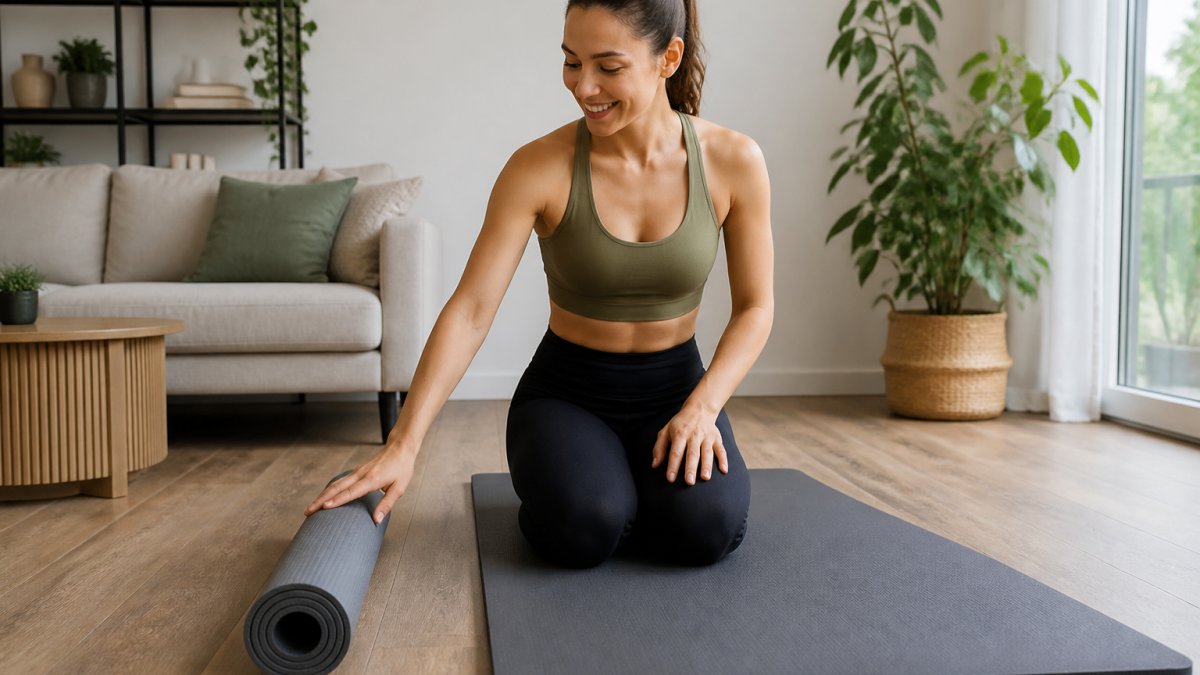
3mm suits experienced practitioners on sprung studio floors. It is light, packs small and gives excellent ground feedback. It offers almost no protection on tile or concrete.
4mm is the balanced middle ground. The Non-Slip Yoga Mat describes its 4mm option as the senior type, and that label is fair: enough cushioning for joints, enough firmness for balance.
6mm is the standard recommendation for beginners and anyone practising at home on hard floors. The Eco-Friendly TPE Yoga Mat and the Non-Slip Thick Fitness Mat 6mm both sit here, and both include a carrying strap or lightweight build for portability.

Beyond 6mm, you are into specialist territory. If you need more cushioning than 6mm provides, add a 1.5cm Thick Non-Slip Yoga Knee Pad rather than buying a thicker mat. It protects knees, wrists and elbows without destabilising your standing work.
For practitioners who travel, the Foldable Non-Slip Yoga Mat folds flat rather than rolling, which fits into a backpack far more easily than a rolled mat of the same thickness.
How to Clean Yoga Mat Properly (and Keep Grip Intact)
Cleaning a yoga mat properly takes two minutes after each session and one deeper clean per month. Skip it and the surface oils that give you grip gradually turn into the surface oils that make you slide.
After every session, wipe the mat down with a damp cloth and let it air dry fully before rolling. Never roll a damp mat. Trapped moisture is what causes odour in TPE and rubber alike.
Once a month, use a diluted mix of water and a small amount of mild soap. Wipe along the texture rather than across it, then rinse with a clean damp cloth and hang the mat to dry away from direct sunlight.
A few habits that protect grip long-term:
- Keep the mat out of hot cars, which degrades TPE and rubber
- Store it rolled, not folded, unless it is a foldable design
- Avoid oil-based cleaners, which leave a residue that kills traction
- Let the mat breathe for a few hours after a heavy session
Conclusion
The gap between a mat that supports your Pilates practice and one that quietly works against it usually comes down to a couple of millimetres. Most people land on 6mm, add a knee pad if their joints need more, and never think about thickness again.
Desi Gym stocks a full range built around that logic, from the anti-skid 6mm mat to eco-friendly TPE options and joint-protecting knee pads, all designed for durability and daily use.
Frequently Asked Questions
Can I use a standard yoga mat for Pilates?
Yes, a standard yoga mat works for most Pilates sessions, especially mat-based routines. The main difference is thickness: yoga mats often sit at 6mm for joint cushioning. If your yoga mat is non-slip and long enough (173cm or more), it will handle Pilates comfortably. The Desi Gym Non-Slip Yoga Mat comes in 3mm, 4mm and 6mm, so you can pick the thickness that suits both practices.
Is a thicker mat better for Pilates?
Not always. A 6mm mat cushions knees, elbows and wrists during kneeling or side-lying work, which suits beginners and anyone with sensitive joints. But once you move into standing balance work or exercises that rely on floor feedback, extra foam can make you feel unstable. Many regulars settle on 4mm as the middle ground. If you want cushioning without losing stability, a 6mm mat paired with a 1.5cm knee pad gives you the best of both.
What is the difference between a yoga mat and a Pilates mat?
The yoga mat vs pilates mat differences come down to thickness, length and density. Yoga mats run thicker (4-6mm) for joint protection in longer holds. Grip matters for both, but Pilates puts more demand on staying planted during controlled leg and core movements.
Do I need a non-slip mat for Pilates?
Yes. Pilates involves a lot of side-lying, kneeling and controlled sliding movements, and a mat that shifts under you breaks your form. Look for a textured surface on both sides, or at least a grippy top layer with a base that holds the floor. The Desi Gym Non-Slip TPE Yoga Mat uses a slip-resistant surface that stays put during core work and stretching, and its guide lines help you keep alignment when you are not in front of a mirror.
What material is best for a Pilates mat?
TPE and natural rubber are the two strongest options. TPE is lightweight, non-toxic, free from PVC and latex, and easy to wipe clean, which makes it practical for daily home use. Natural rubber offers excellent grip and durability but weighs more. NBR foam, used in knee pads, is softer and better for targeted joint cushioning than for a full mat. For most people, a 6mm TPE mat covers comfort, grip and easy maintenance in one purchase.
How do I clean my Pilates mat properly?
Wipe the mat with a damp cloth after every session to remove sweat, then let it air dry fully before rolling it up. For a deeper clean, use a mild soap diluted in water and avoid soaking the mat or leaving it in direct sunlight, which breaks down the surface. Never machine wash or tumble dry. TPE mats are moisture-resistant, so a quick wipe is usually enough to keep them fresh and odour-free.